

America Leads the World in Science and Technology
With the support of federal investments in basic research, generations of scientists have channeled American ingenuity to unlock more breakthroughs than any other country on Earth.
Vannevar Bush established a unique and lasting framework with his 1945 report Science – The Endless Frontier, fortified by the creation of agencies like the National Science Foundation (NSF) and National Institutes of Health (NIH) as well as support from the Department of War and Department of Energy. This highly successful model has since sustained U.S. competitiveness and innovation.
As the nation’s 250th anniversary invites us to reflect on our past and imagine our future, university research stands out as one of the clearest through lines connecting the country’s founding ideals to its modern‑day strengths in innovation and prosperity.
The Institutions That Power America’s Research Enterprise
Since World War II, federal funding for basic research at U.S. colleges and universities has delivered unparalleled breakthroughs across a wide range of scientific disciplines.
Our “250 Years of Innovation” Video Series celebrates the nation’s semiquincentennial and recognizes the integral role that higher education institutions play in catalyzing America’s world-class research ecosystem.
The series features Vice Presidents for Research (VPRs) and Vice Chancellors for Research (VCRs) from TSC member institutions, who share how federal investments in fundamental science fuel new discoveries, unlock novel technologies, strengthen our economy, improve medical treatments, and so much more. The VPRs and VCRs also note how strong and sustained government funding for basic research on university campuses will position the United States for 250 more years of scientific excellence.

Steven E. Taylor, Ph.D., PE, Fellow ASABE
Senior Vice President for Research and Economic Development—Auburn University

“This becomes the base of operations for those bright students and faculty members to answer really fundamental questions and uncover fundamental workings of science and technology.”
Dr. Steve Taylor has served as Auburn University’s Senior Vice President for Research and Economic Development since 2023, leading a research enterprise that reached $431 million in expenditures in fiscal year 2025. He also serves as president of the Auburn Research and Technology Foundation, which advances applied research, industry partnerships, startups, and workforce innovation through the 240-acre Auburn Research Park. Since joining Auburn in 1989, Taylor has held numerous leadership roles, including interim dean of the Samuel Ginn College of Engineering, where he helped establish the Auburn University Applied Research Institute in Huntsville. He holds degrees in agricultural engineering from the University of Florida and Texas A&M University.

Jeanne Hossenlopp, Ph.D.
Vice President for Research and Innovation—Marquette University
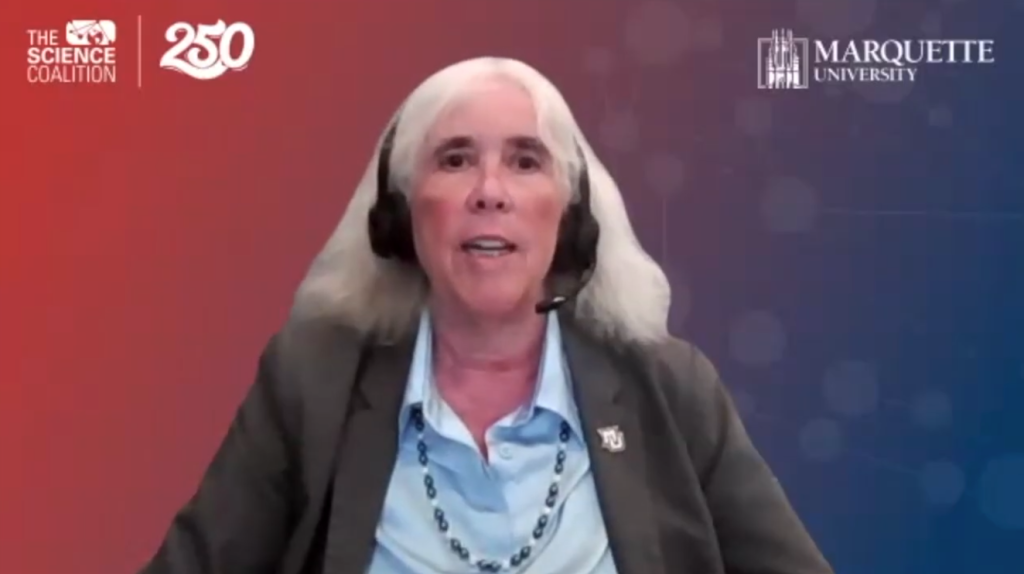
“One of the real opportunities that federal funding gives us that we cannot realize through private sector funding is the ability to explore new ideas — where the application and the pathway to commercialization are not clear initially. That's really what seeds the next generation of innovation.”
Dr. Jeanne Hossenlopp is Vice President for Research and Innovation and professor of chemistry at Marquette University. A Marquette faculty member since 1989, she previously served as vice provost for research, dean of the Graduate School, interim dean of the Klingler College of Arts and Sciences, and chair of chemistry. Her research spans laser-induced chemical reactions, nanomaterials, chemical sensors, fire retardants, and water-quality remediation, supported by NSF, NIST, and USDA funding. She leads initiatives advancing research, innovation, entrepreneurship, compliance, and technology transfer. Hossenlopp earned degrees from Colgate University, Siena Heights College, and Syracuse University and was named a 2020 Milwaukee Business Journal Woman of Influence.
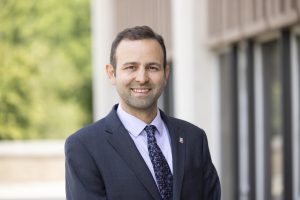
Richard Mocarski, Ph.D.
Vice President of Research and Innovation Partnerships—Northern Illinois University

“We're a research institution, but we also are very much an access institution for students. Federal funding has allowed us to pursue basic research in everything from quantum physics and semiconductors to cultural anthropological work in sub-Saharan Africa. Through all of that, our students are at the table.”
Richard Mocarski, Ph.D., arrived at NIU in 2024 after previously serving as the Associate Vice President of Research at San José State University. Over the course of two decades of progressive experience in research administration, he has played a leadership role in securing and administrating more than a billion dollars in external funding. Mocarski holds bachelor's degrees in English and psychology from the University of Michigan and a master's degree in communication studies and Ph.D. in communication and information sciences from the University of Alabama. His own research has been funded continually for over a decade by the National Institutes of Health and focused on lowering barriers to health care.

Ryne P. Raffaelle, Ph.D.
Vice President for Research—Rochester Institute of Technology

“The science itself is very important, but when I look at our federally funded research portfolio, these are really investments in our workforce of the future.”
Dr. Ryne P. Raffaelle is Vice President for Research and Associate Provost at Rochester Institute of Technology. Previously, he directed the National Center for Photovoltaics at the U.S. Department of Energy’s National Renewable Energy Laboratory. Since joining RIT in 1999, he has served as inaugural director of the NanoPower Research Labs and academic director of the Golisano Institute for Sustainability. His research spans nanomaterials, photovoltaics, lithium-ion batteries, and space power systems. Raffaelle has authored more than 200 peer-reviewed publications, holds eight U.S. patents, and has helped launch three companies. He also serves as managing editor of Progress in Photovoltaics and holds physics degrees from Southern Illinois University and the University of Missouri–Rolla.

Duncan Brown, Ph.D.
Vice President for Research—Syracuse University
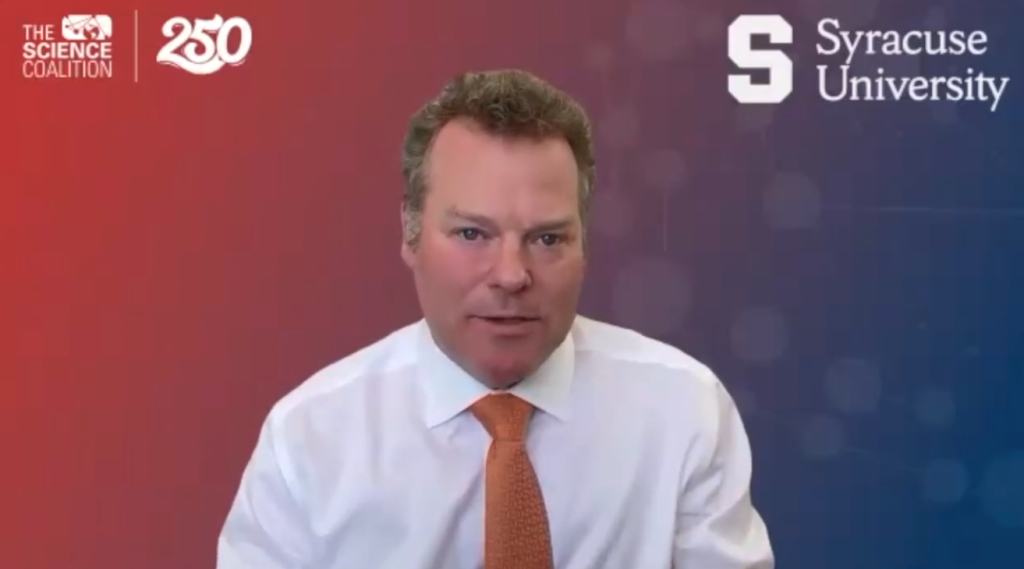
“One key thing that every taxpayer and lawmaker should know when they invest in basic sciences, they're investing in the economic future of our country.”
Duncan Brown is Vice President for Research and the Charles Brightman Endowed Professor of Physics at Syracuse University. An internationally recognized leader in gravitational-wave astronomy, he played a pivotal role in LIGO’s discovery of gravitational waves and contributes to the development of Cosmic Explorer, a next-generation U.S. observatory. Brown has strengthened Syracuse University’s research enterprise by establishing its Research Computing group and Open Source Program Office. He also leads the university’s Collaboration and Commercialization Center within the NY SMART I-Corridor Tech Hub, supporting regional semiconductor innovation and university-industry partnerships.

John M. Horack, Ph.D.
Vice President for Research—The Ohio State University
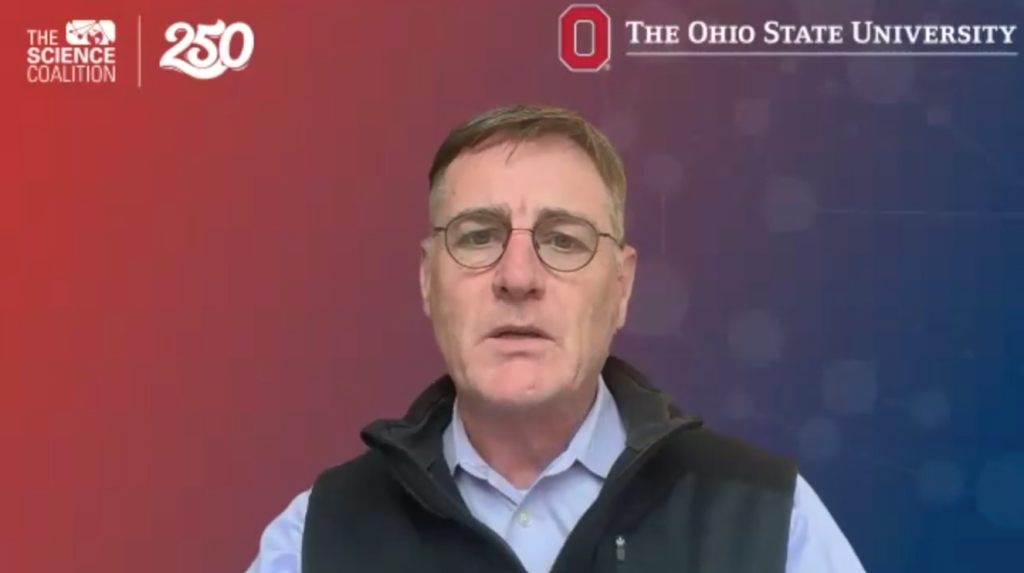
“These are really national interest priorities that the United States chooses to fund for the creation of social and economic and educational and quality of life outcomes for our citizens, not just today with among those who actually fund the research today, but for generations to come.”
Dr. John M. Horack is Vice President for Research at The Ohio State University, leading the Enterprise for Research, Innovation and Knowledge and overseeing research strategy, commercialization, venture initiatives, and partnerships. A globally recognized leader with 30 years of experience in the spaceflight industry, he holds the Neil Armstrong Chair in Aerospace Policy and faculty appointments in the colleges of engineering and public affairs. Before joining Ohio State in 2016, Horack held senior roles at Teledyne Brown Engineering, The University of Alabama in Huntsville, and NASA’s Marshall Space Flight Center. He has authored more than 100 papers and holds degrees in physics and astronomy from Northwestern University and The University of Alabama in Huntsville.
Roger Wakimoto, Ph.D.
Vice Chancellor for Research, Innovation & Creative Activities—University of California, Los Angeles

“The federal government funds research to expand our knowledge long before it forms the foundation of what industry later uses for commercial innovation.”
Roger Wakimoto, PhD, became UCLA’s Vice Chancellor for Research in 2017. An atmospheric scientist, he specializes in mesoscale meteorology, severe convective storms, and radar meteorology. He previously served on UCLA’s atmospheric sciences faculty, including as department chair, and held leadership roles at the National Center for Atmospheric Research and the National Science Foundation’s Directorate for Geosciences. Wakimoto has published extensively, served on numerous scientific panels and boards, and was president of the American Meteorological Society. He holds a BS in meteorology from San José State University and a PhD in geophysical sciences from the University of Chicago.
All profiles A to Z by institution
Follow the series
Breakthroughs Born from University Research
Click each icon below to explore the innovations!
CUTTING-EDGE HEALTH CARE
Publicly funded research drives disease prevention and life-saving treatments that improve outcomes and extend lives.






ALZHEIMER’S DIAGNOSIS
MRNA VACCINES
CAR T-CELL THERAPY
MS TREATMENT
HPV VACCINE
BLOOD BANKS
BIOMEDICAL INNOVATION
Biomedical research leads to new innovations that make healthcare more precise, effective, and accessible.






PACEMAKERS AND DEFIBRILLATORS
BLADELESS LASIK
MRI MACHINES
IVF AND REPRODUCTIVE HEALTH
FOUNDATIONAL GENETIC RESEARCH
MEDICAL SIMULATION TRAINING
AGRICULTURAL SOLUTIONS
These endeavors allow us to produce better, more abundant foods while making our systems more efficient and sustainable.






MAPPING THE CORN GENOME
BREEDING BETTER HARVESTS
FLOOD-RESISTANT RICE
SUSTAINABLE FOOD SYSTEMS
PLANT TAXONOMY
ANTIMICROBIAL RESISTANCE
TECHNOLOGICAL ADVANCEMENTS
University research powers smarter tools and technologies that are transforming how we live and work.







ARTIFICIAL INTELLIGENCE
GOOGLE® ALGORITHMS
CRISPR GENE EDITING TECHNOLOGY
WEB BROWSERS
GRAVITATIONAL WAVES
VIRTUAL REALITY
Digital Imaging and Remote Sensing Image Generation
NATIONAL SECURITY & DEFENSE
With federal funding, universities pioneer innovative technologies and approaches that help keep Americans safe and support U.S. leadership.






TRANSISTORS
WEATHER PREPAREDNESS
RARE EARTH MINERAL MINING
DUAL-USE TECHNOLOGIES
NEW STATE OF MATTER
MILITARY BASE PROTECTION
Investing Now for the Next 250 Years

As America celebrates 250 years, the nation faces a defining choice: whether to sustain the partnership that made it the world leader in science and innovation or risk falling behind.
Federal investment in university research has powered discoveries that strengthen the economy, protect national security, and improve Americans’ lives. But leadership is not guaranteed.
Over the next 250 years, meeting new challenges — including global competition, technological transformation, energy and food security, and public health — will depend on the breakthroughs that begin in research universities today.
If the United States wants to remain the world’s leader in innovation, it must recommit to robust and sustained federal support for university-led basic research and continue building the Endless Frontier for generations to come.
Download the 250 Years of Innovation report on our website.