Early Exposure to Computing
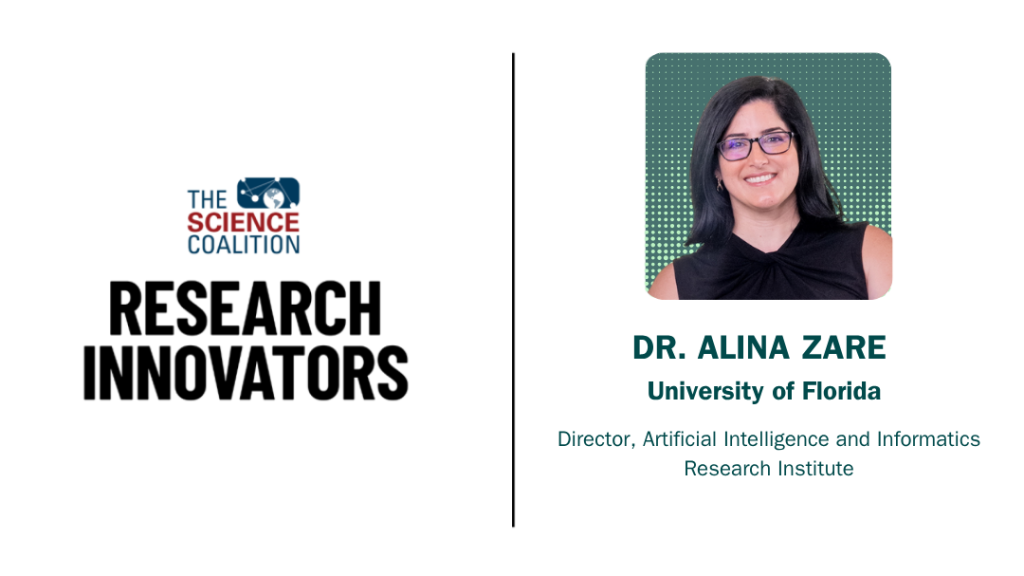
When Dr. Alina Zare's mother brought home an IBM personal computer in the 1980s, it sparked a fascination that would shape her future career.
“I’ve had an interest in science all along,” Dr. Zare said. “That early exposure to programming really gave me a love of computing.”
Years later, at the University of Florida, an image-analysis course introduced her to the world of research and to mathematician Dr. Paul Gader, who became her doctoral advisor. His approach continues to influence her work today: using fundamental science to solve practical problems.
“I enjoyed being very applied in my work and, through those applications, identified foundational questions that need attention,” Dr. Zare said.
Building Better Artificial Intelligence
Today, Dr. Zare is a professor in the University of Florida’s Herbert Wertheim College of Engineering. She directs the Machine Learning and Sensing Laboratory and the Artificial Intelligence and Informatics Research Institute, a campus-wide organization focused on advancing AI and its practical applications.
Her research is driven by real-world challenges, but her goal is not simply to create one-off solutions. Instead, Dr. Zare and her students develop advances to foundational AI methods that can work across disciplines, datasets, and domains.
“We do a lot of collaborative work in plant science, ecology, and agriculture,” Dr. Zare said. “We apply existing AI methods to the datasets and the challenges in those fields. We see what doesn’t work, and that drives the foundational AI research that we need to do.”
In agriculture, her team uses AI to help develop nutrient recommendations, such as how much fertilizer crops may need and when it should be applied. The work could improve efficiency, lower costs, and reduce nutrient runoff. Her lab also studies disease detection and automated plant phenotyping, the measurement of observable plant traits, to support plant breeding and agricultural research.
From Landmines to Plant Roots
Some of Dr. Zare’s most innovative agricultural research traces its roots to a very different field: national defense.
Early in her career, she worked on applications such as buried landmine detection, target identification and tracking. During a presentation about locating landmines, someone in the audience posed an unexpected question: Could the same technology help identify plant roots below ground?
“We said, ‘Well, we can give it a try,’” Dr. Zare recalled. “A decade later, we’re now using AI to improve our ability to locate and study plant roots.”
The experience highlights a recurring theme in her work. Technologies developed to solve one problem can often unlock solutions in entirely different fields. By focusing on foundational methods rather than narrow applications, researchers can open doors to discoveries they never anticipated.
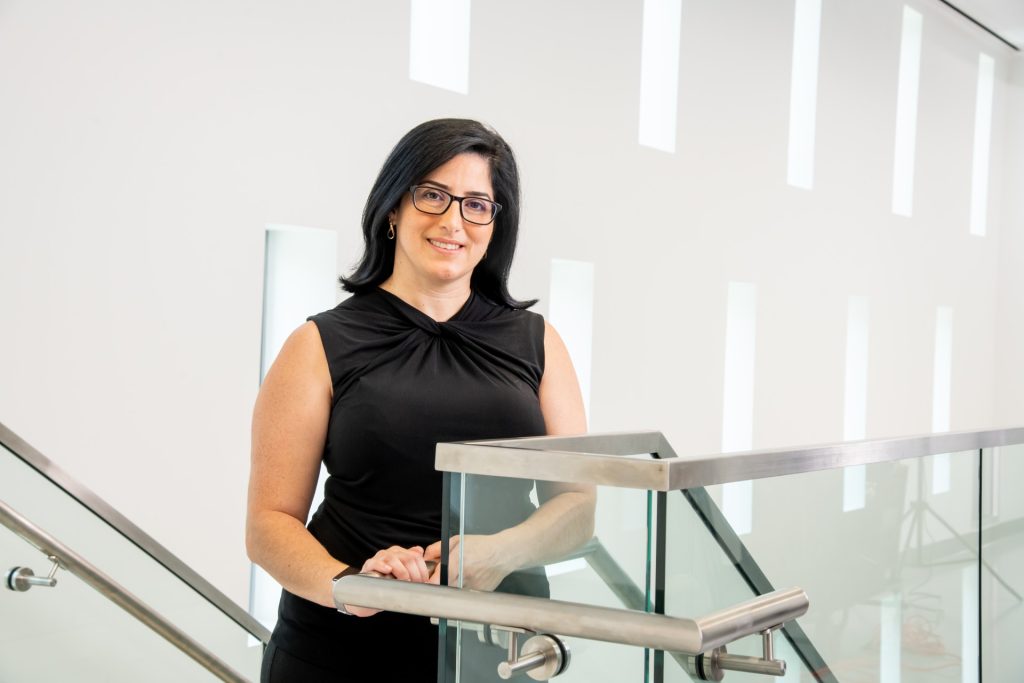
Dr. Alina Zare, a University of Florida engineering professor, develops foundational AI tools with diverse applications.
The Impact of Federal Funding
Federal investments in scientific research have enabled Dr. Zare and her students to pursue a wide range of projects. Her research portfolio includes funding from the National Science Foundation (NSF), the U.S. Department of Agriculture, the U.S. Department of Energy and the Advanced Research Projects Agency–Energy.
She credits an NSF Faculty Early Career Development Program (CAREER) award with helping launch her professional trajectory. The program supports early-career faculty who integrate research and education.
“My career took a big jumpstart with the NSF CAREER award when I was a junior faculty member,” Dr. Zare said. “It was a foundational program that ties research with education.”
She also emphasizes the role federal research funding plays in preparing the next generation of scientists, engineers, technologists and entrepreneurs.
“Without federal funding for basic research, it’s hard for students to learn how they can leverage cutting-edge technologies to advance the basic research needed to solve a range of everyday practical problems,” Dr. Zare said.
A Community Endeavor
Dr. Zare advises early-career scientists to build connections across disciplines while remaining grounded in their own expertise. Some of the most compelling research ideas, she said, emerge when researchers bring together concepts that have not previously been combined.
She encourages scientists to learn about the challenges facing colleagues in other fields and to look for opportunities to collaborate. Those partnerships can lead to new questions, new applications and new ways of advancing knowledge.
“Science is inherently a community activity,” Dr. Zare said. “You see science sometimes portrayed in the movies as a lone scientist in their lab, and that’s just not the way it is.”
That belief has shaped Dr. Zare’s own career, from adapting technologies developed for national defense to challenges in agriculture and ecology. For her, scientific progress depends on people working together, exchanging ideas and building on the foundational research that makes future discoveries possible.