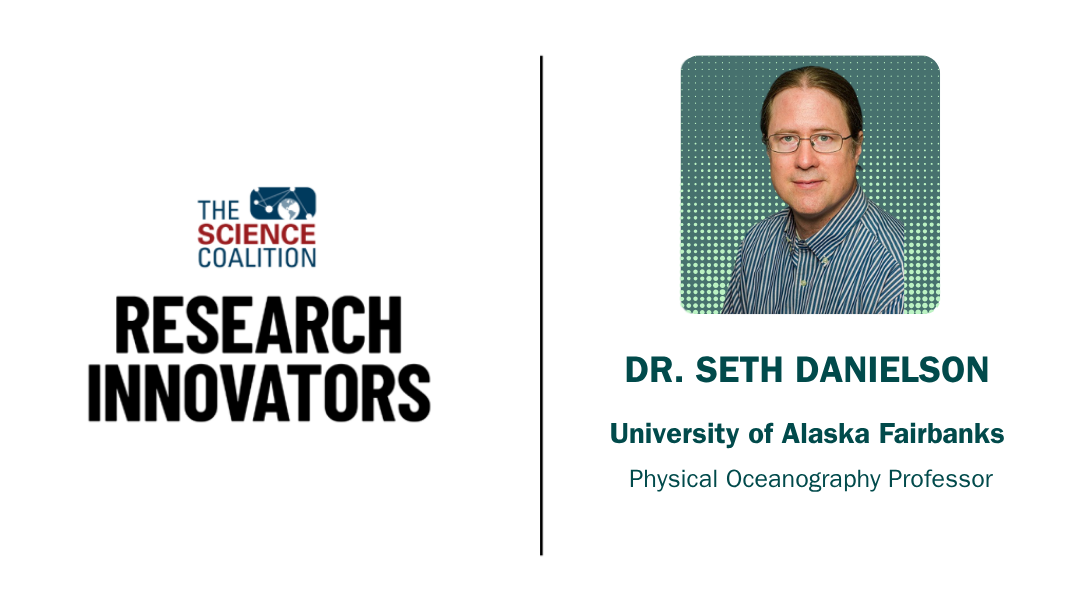
Dr. Seth Danielson: Undersea Gliders, Ecosystems, and the Future of Ocean Science
As a professor of oceanography at the University of Alaska Fairbanks College of Fisheries and Ocean Sciences, Dr. Danielson studies how physics, chemistry, and biology interact in Alaskan waters, which support 60% of American seafood harvest and more than 81,000 jobs.
His work blends long‑term observations, autonomous technologies, and collaboration with ecologists, fisheries managers, and coastal communities to understand changes in the North Pacific and Arctic Oceans.
Watching the Whole Ecosystem, Not Just One Species
An important component of Dr. Danielson’s research focuses on providing fishery managers the information they need to implement modern, ecosystem-based management practices. Instead of looking at a single species in isolation, his work examines how the entire marine food web adjusts to ever-shifting environmental conditions.
Through efforts such as the Northern Gulf of Alaska Long-Term Ecological Research program, Dr. Danielson and colleagues collect physical, chemical, and biological data that reveal how the ecosystem changes over seasons and decades. These observations help scientists detect shifts in biological productivity, identify emerging risks to fisheries, and test new ecological theories about marine ecosystem resilience and adaptations.
This holistic perspective is critical as decisions about harvest levels, protected areas, and industrial activities increasingly require an understanding of how humans, marine life, and the environment interact. With better data, decisionmakers can move from reacting to crises toward anticipating changes before they ripple through the food web.
Filling Data Gaps with Gliders, Moorings, and New Tools
The vast and remote expanses of ocean near Alaska make it challenging for traditional research vessels to monitor changing sea conditions year-round. To close the gap, Dr. Danielson’s team relies on an array of autonomous mobile and fixed robotic instruments that can stay in the field for months at a time.
Underwater gliders are a central tool. Equipped with fisheries acoustics, fish tag detectors, or hydrophones for monitoring marine mammal sounds, gliders can travel over a thousand kilometers while also profiling temperature, salinity, oxygen, and other environmental parameters.
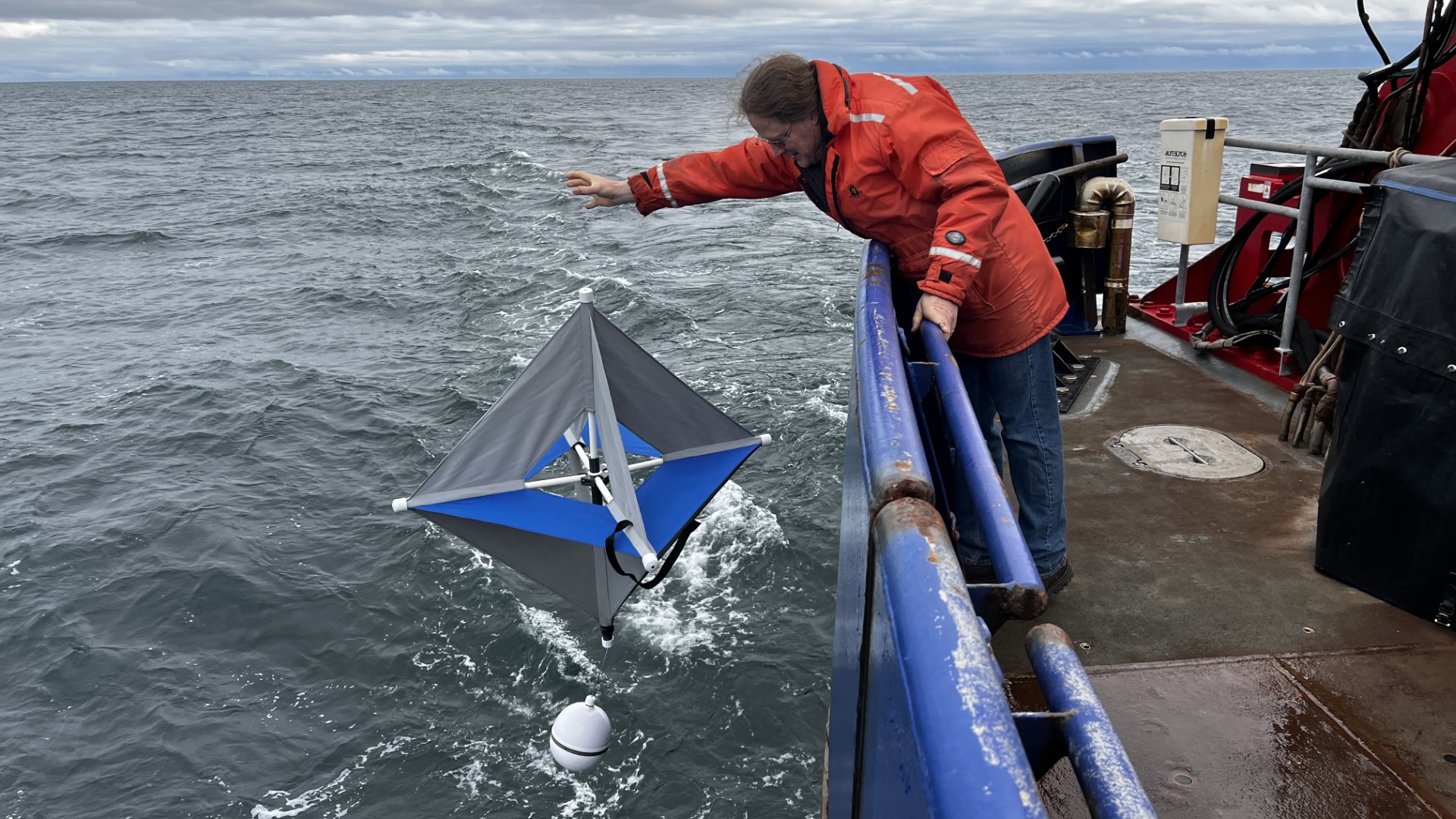
Dr. Danielson deploying a satellite-tracked oceanographic drifter, which measures ocean surface currents, in the Gulf of Alaska.
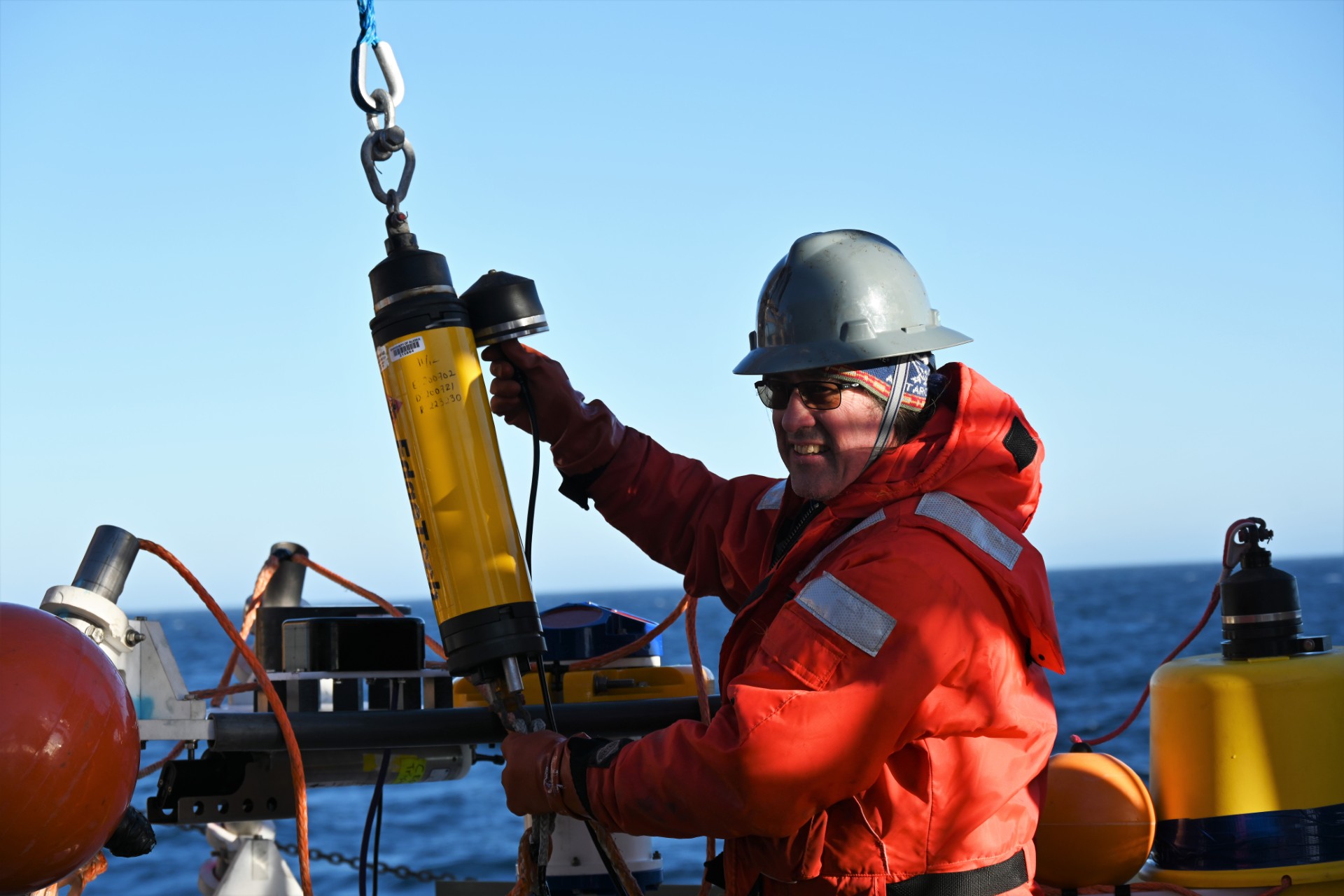
Dr. Danielson preparing a bottom-landing tripod for deployment in the Arctic Ocean, where it will remain on the seafloor for an entire year collecting data.
Danielson’s group shows how gliders operate, changing buoyancy to zig-zag up and down through the water and surfacing periodically to transmit data and receive new instructions.
Oceanographic moorings anchored to the seafloor complement the mobile gliders. Outfitted with robotic instruments that record data and collect physical samples, moorings provide high-frequency records at fixed locations throughout the year. With shipboard sampling of water chemistry, plankton, and other “snapshot” measurements, the moorings and gliders capture how the physical environment triggers phytoplankton growth. In turn, zooplankton transfer phytoplankton energy up the food chain to fish and other predators, ultimately providing jobs and sustenance to coastal communities.
Powered by Long-Term Federal Investment
Behind each of these observing systems is a foundation of long-term public investment. Danielson’s research has been supported by multiple federal agencies, including the National Science Foundation and the National Oceanic and Atmospheric Administration (NOAA).
Regional ocean observing associations funded through NOAA, such as the Alaska Ocean Observing System, also play a critical role. Supported by multi-year funding cycles, these programs provide the continuity needed to maintain moorings and gliders that generate data records that span temperature and climate cycles.
As Dr. Danielson explains, “You can’t understand real change in the ocean on a one‑ or two‑year timeline. Long‑term, stable federal funding is what lets us keep watching, keep learning, and provide actionable, trustworthy information to coastal communities and fishery managers.”
Collaboration for Public Benefit
Cross-disciplinary partnerships are essential to this work. As a physical oceanographer, Danielson works with marine mammal biologists, ecologists, and chemists. These collaborations ensure that measurements of temperature, salinity, and currents translate into insights about ecosystem health that inform people who depend on the ocean for food, culture, and livelihoods.
Taken together, this network of scientists, high-tech instruments, and long‑term federal support helps build a clearer picture of how Alaska’s oceans are changing and what it will take to sustain healthy marine ecosystems and coastal communities for generations to come.