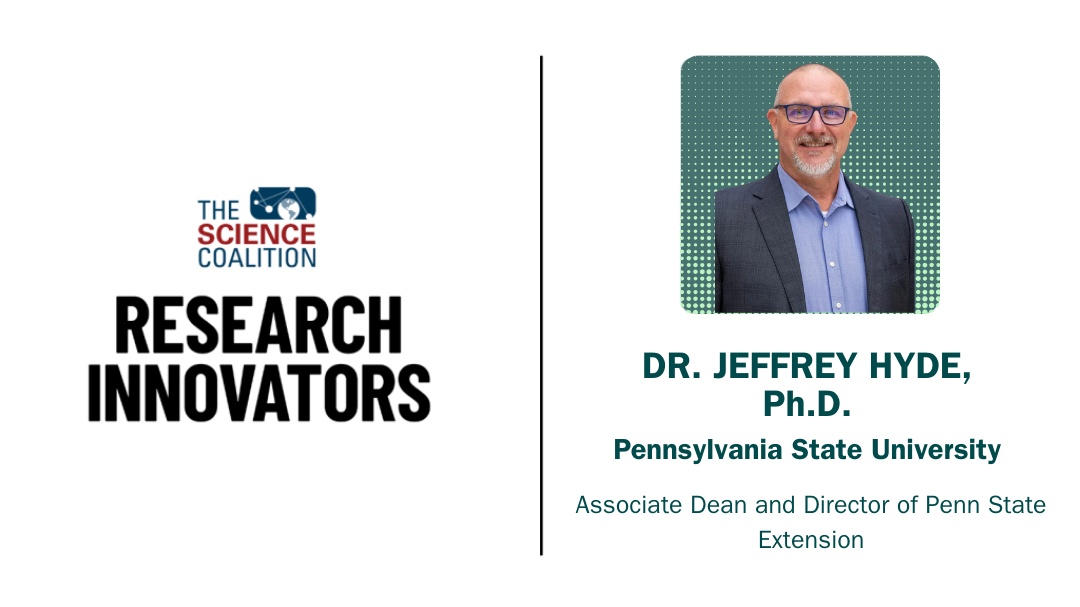
Dr. Jeffrey Hyde: Economics, Innovation, and the Future of Farming
Dr. Jeffrey Hyde never expected to devote his career to agriculture. As an undergraduate majoring in economics, he found that the discipline’s focus on incentives, choices, and decision-making mirrored the way he naturally thought about the world. Dr. Hyde saw a future in teaching and research, and he found the perfect intersection of economic theory and real-world impact in agricultural economics.
That inspiration took Dr. Hyde to Purdue University, where he earned his Ph.D. and began exploring how data-driven insights could help farmers. The blend of quantitative modeling, behavioral analysis, and field evidence set the course for a career translating complex economic findings into tangible tools for agricultural producers.
Today, as director of Penn State Extension and a professor of agricultural economics, Dr. Hyde leads efforts to turn university research into solutions that farmers and communities can use every day. Tilva, a new AI-driven resource launched by Penn State Extension, is one of the clearest examples of that mission in action.
Tilva: 24/7 Support for PA Farmers
Tilva is a free, easy-to-use digital assistant that gives farmers and agricultural professionals around-the-clock access to trusted, research-based guidance. A user can type a question in plain language or upload a photo, and Tilva responds in seconds with information drawn from decades of Penn State Extension research and expertise.
The tool can help identify pests, plant diseases, and weeds through image recognition and interpret soil test results from Penn State’s Agricultural Analytical Services Laboratory. It also suggests relevant workshops, online courses, and certificate programs, helping users move from a quick answer to deeper learning when they need it.
For Dr. Hyde, Tilva is not just a piece of technology — it is a way to expand the reach of Penn State Extension. The tool handles routine questions and directs users to existing resources so that educators can focus on navigating complex issues and developing new programs. When questions touch on sensitive areas like pesticide use, food preservation, or animal medication, Tilva is designed to flag those topics and route users to human experts — such as county educators, veterinarians, or regulatory officials — who can better assist with the requests.
Expanding Capacity with Federal Support
Innovations like Tilva depend on long-term federal investments in agricultural research and extension programs, including support from the U.S. Department of Agriculture and its National Institute of Food and Agriculture. These dollars help sustain the underlying research, digital infrastructure, and outreach capacity that make tools like Tilva possible. They also ensure that when new technologies emerge, universities like Penn State can adapt them in ways that put public needs first.
“Federal support provides both continuity and capacity,” Hyde explains. “It allows us to take research that’s basic in nature, translate it into something user-friendly for farmers, and ensure that the results have direct public value.”
Mentorship and the Next Generation
Through mentoring opportunities, research efforts, and ongoing partnerships across disciplines, Dr. Hyde advances discovery, education, and outreach that serve local communities and meet national priorities. His work underscores how federally funded agricultural research helps build smarter farms, stronger economies, and more resilient food systems.
“Good science doesn’t stop at publication,” he says. “Our job is to make sure the research we do has real-world impact and that people see the public return on every federal dollar invested.”